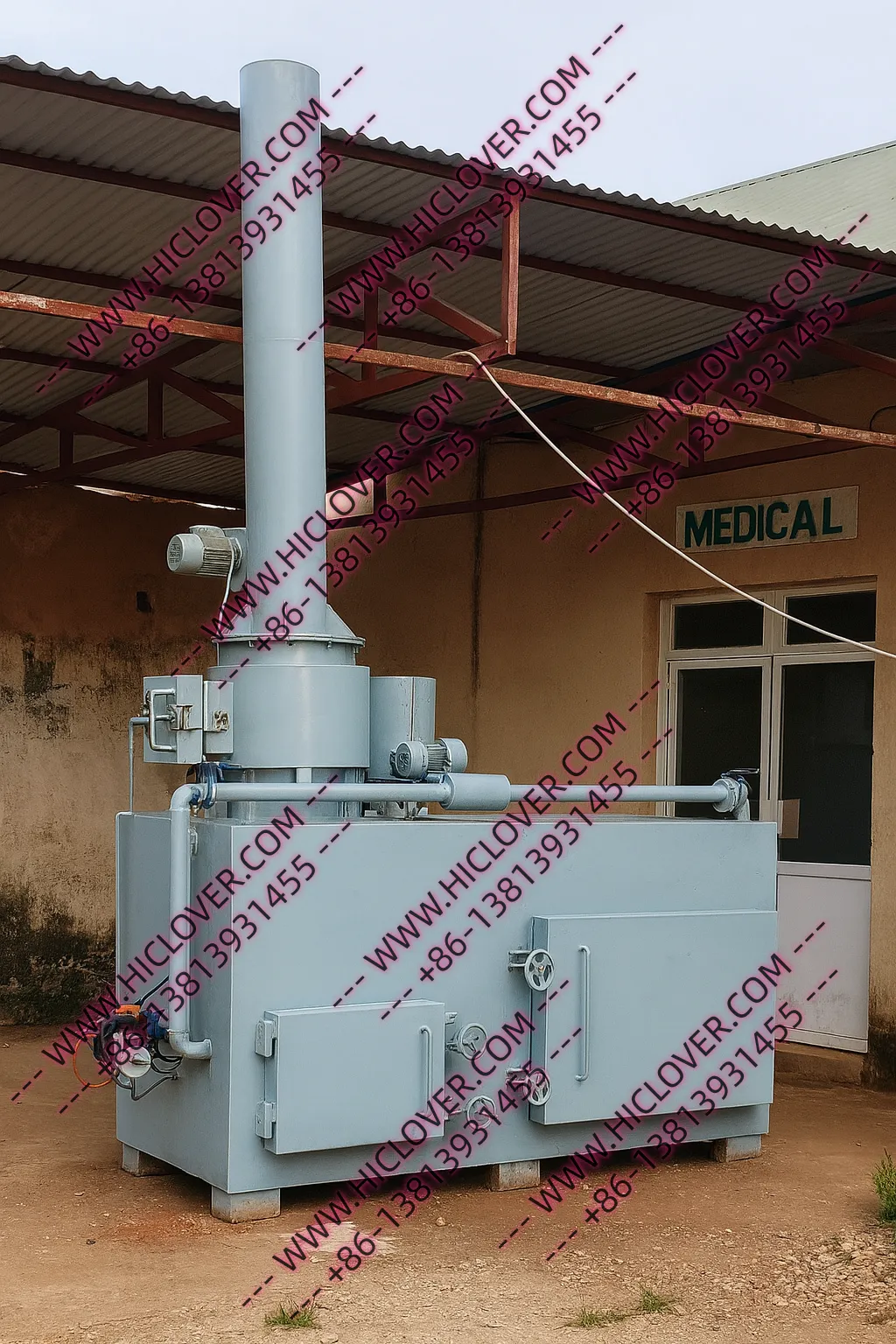
Navigating Efficient Waste Management: A Technical Guide on HICLOVER Containerized Incinerator Systems
Introduction and System Overview
At the forefront of industrial waste management, HICLOVER waste incinerators exemplify engineering reliability and advanced technical standards. In this guide, we explore the rigorous design philosophy behind HICLOVER systems while considering pivotal aspects such as **containerized incinerator cost**, **containerized incinerator design**, and **Ghana incinerator china**. Within the first moments of operation, these robust systems adhere to stringent industrial specifications including precise temperature ranges—from 850°C to 1200°C—aligned with established medical incinerator operating temperature standards. This narrative details a journey through design, performance, and operational efficiencies, with an emphasis on waste incinerators and the vital technical parameters that drive their success.
The incinerators are built on a foundation that harmonizes automation with rigorous manual control options, ensuring both flexibility and reliability. Designed to meet WHO and EU emission frameworks, these systems incorporate dual combustion chambers that guarantee complete and efficient waste destruction. With a focus on physical integrity, the integration of PLC automation and a mobile plug-and-play design further underscores HICLOVER’s dedication to industrial excellence. Procurement managers and decision makers will find the ongoing story of HICLOVER’s evolution embedded in every technical feature, and every engineering decision is made with global safety standards in mind.
Technical Foundations and Operating Principles
HICLOVER waste incinerators are engineered with an intricate understanding of combustion principles and thermal dynamics. The dual chamber system operates with precise temperature monitoring and high-temperature retention, ensuring that each incineration process meets international technical temperature standards. In this narrative, every key component is meticulously designed; for example, the integration of PLC automation not only provides reliable remote operation but also enhances process control in distributed waste management systems.
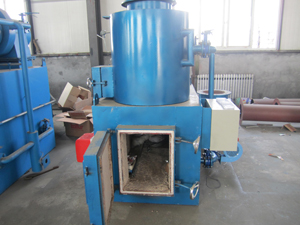
The detailed design incorporates a series of advanced features including either optional wet or dry scrubbers that suit different emission control requirements. The design philosophy reflects advanced digital automation in industrial equipment, proving essential in an era where ESG compliance and carbon emission reduction pressure are central themes. Attention is paid to technical temperature standards which guarantee a controlled thermal environment, ensuring that combustion is complete and that hazardous residue is minimized.
Further insight can be gained by exploring the technical documentation available on the HICLOVER website at https://www.hiclover.com/, where engineering specifics and construction details are described in industry-standard language. Engineers are also encouraged to reference the comprehensive technical documentation on medical+incinerator+secondary+chamber+temperature+standard to understand the dual chamber operation essential for complete waste breakdown. This detailed exploration caters to an audience familiar with combustion science and the imperative for robust control systems in decentralized waste management scenarios.
Emphasizing heat retention and accurate temperature control, the thermal efficiency of these incinerators is not only validated by advanced engineering techniques but also by adherence to international regulatory frameworks. As part of this narrative, the interplay between digital monitoring systems and manual override procedures is explored, highlighting robust construction that benefits from HICLOVER’s factory manufacturing capability and long-standing engineering experience.
Comparative Analysis for Diverse Operational Environments
The operational excellence of HICLOVER waste incinerators invites a detailed comparison with other available technologies in the market. When evaluating fixed installations against containerized modular systems, procurement managers will find that the **containerized incinerator cost** remains highly competitive, thanks to direct factory production and an innovative containerized incinerator design approach. These systems are developed with multi-fuel capabilities, including diesel, LPG, and natural gas, ensuring versatility across a wide range of applications.
HICLOVER’s narrative of innovation is woven with the benefits of custom design elements that can be tailored to meet remote site suitability requirements. In technical evaluations, the advantages become clear when comparing fixed incinerators and mobile modular solutions. The latter, with a mobile plug-and-play design, facilitate easy deployment in varied operational geographies—including crisis zones and humanitarian camps—where reliable waste treatment is a critical need.
Such comparisons also extend to the automation control schemes tested in the field. HICLOVER’s dual combustion chambers, supported by both PLC automation and manual fallback options, provide heightened control over combustion parameters, a factor that is crucial under stringent digital automation regimes. The engineering design not only sustains process reliability under controlled high-temperature conditions but also integrates robust digital interfaces that meet high precision industrial standards.
This analysis further reveals the operational cost benefits associated with these advanced containerized designs. By leveraging direct factory supply, clients enjoy enhanced stability of the supply chain without the intermediary complications often observed in trading companies. The combination of engineering excellence and advanced materials ensures that the incinerators’ durability is maintained even under prolonged industrial use.
Deployment and Global Market Considerations
Industrial scenarios around the globe continue to demand robust solutions for hazardous waste management. The narrative of HICLOVER waste incinerators comes to the forefront as these systems are strategically designed for diverse deployment environments. In regions facing global infectious disease preparedness challenges and stringent ESG compliance pressures, HICLOVER incinerators offer reliable performance and critical safety standards. Deployments in remote mining/oil camps and crisis zones further illuminate the versatility of these systems, which must perform reliably under varied operational and environmental stresses.
The inclusion of the keyword **Ghana incinerator china** is significant as it signals the global export capability and market penetration strategies adopted by HICLOVER. With flexible configuration options such as customizable chamber volume and mobile modular designs, the incinerators can be rapidly deployed to regions where both environmental and operational regulations require adaptive and robust waste management solutions. The tailored approach in design, as observed in **containerized incinerator design** strategies, ensures that systems meet the operational needs while optimizing the **containerized incinerator cost**.
Engagement with global markets has been driven by a dual focus on engineering innovation and supply chain resilience. Factories directly manufacturing these incinerators guarantee not only product consistency but also a stable supply chain. This attribute becomes particularly valuable when serving dynamic markets such as those in Ghana, where industrial equipment from China has become synonymous with reliable performance. Moreover, addressing the digital automation and remote control requirements of modern industries, these incinerators embody the integration of PLC automation – a feature highly valued by stakeholders during procurement decisions.
Market considerations also span the broader context of decentralized waste management. With challenges such as carbon emission reduction pressure and meeting rigorous WHO and EU guidelines, these incinerators represent a strategic response to both environmental and regulatory demands. Their deployment in decentralized setups and mobile modules enables efficient waste management while supporting energy recovery systems and contributing to broader ESG initiatives.
Operational Advantages in Modern Industrial Applications
The story of HICLOVER’s incinerator evolution is marked by significant technical milestones and operational innovations. Endowed with dual combustion chambers and engineered using advanced PLC automation, these systems demonstrate exceptional reliability under high-temperature conditions. The integration of either optional wet or dry scrubbers enhances the overall emission control, ensuring full adherence to environmental frameworks and global industrial safety regulations.
Engineering reliability is further reinforced by the incorporation of mobile modular designs, which allow the incinerators to be rapidly relocated in response to evolving operational requirements. This flexibility is particularly valuable in settings where digital automation in industrial equipment is a necessity. The system’s high-temperature retention capacity is integral for ensuring that combustion processes align with strict temperature validations, which in certain cases adhere to standards similar to those of medical incinerator design protocols.
The robust design approach centers on providing a customizable solution that can be configured to suit various operational environments. Whether deployed in remote mining camps or humanitarian crises where waste management needs are urgent, HICLOVER’s incinerator systems deliver consistent performance through a persistent focus on engineering excellence. The mobile plug-and-play design and advanced dual chamber technology ensure uninterrupted operation even in decentralized waste processing setups.
Factory direct supply stands out as a distinct competitive advantage, enabling decision makers to bypass costly intermediaries while benefiting from HICLOVER’s deep engineering experience and proven manufacturing capabilities. Such direct sourcing mitigates risks associated with unstable global supply chains, ensuring that the end-user receives a system calibrated for high performance. Moreover, the flexibility to integrate either PLC or manual controls enhances operational resilience in environments where traditional infrastructure is lacking.
The engineering narrative extends to the proactive measures taken for global infectious disease preparedness and carbon emission reduction pressures. Each system is meticulously developed with an eye on long-term operational sustainability and industrial automation trends. This enduring commitment to technical excellence and operational adaptability ensures that HICLOVER waste incinerators continue to set the standard in efficient and regulated waste management practices.
Embedded within this narrative is the demonstration of engineering reliability that HICLOVER consistently delivers. The design framework leverages proven technological trends aligned with current digital automation requirements, providing the type of reliable infrastructure that meets both technical and commercial objectives for complex waste management challenges.


Comments are closed